FREDERICK WARD
BUSHRANGER CAPTAIN THUNDERBOLT
Analysing the Evidence
and
Debunking the Myths
MARRIAGE INFORMATION
Copyright Carol Baxter 2024
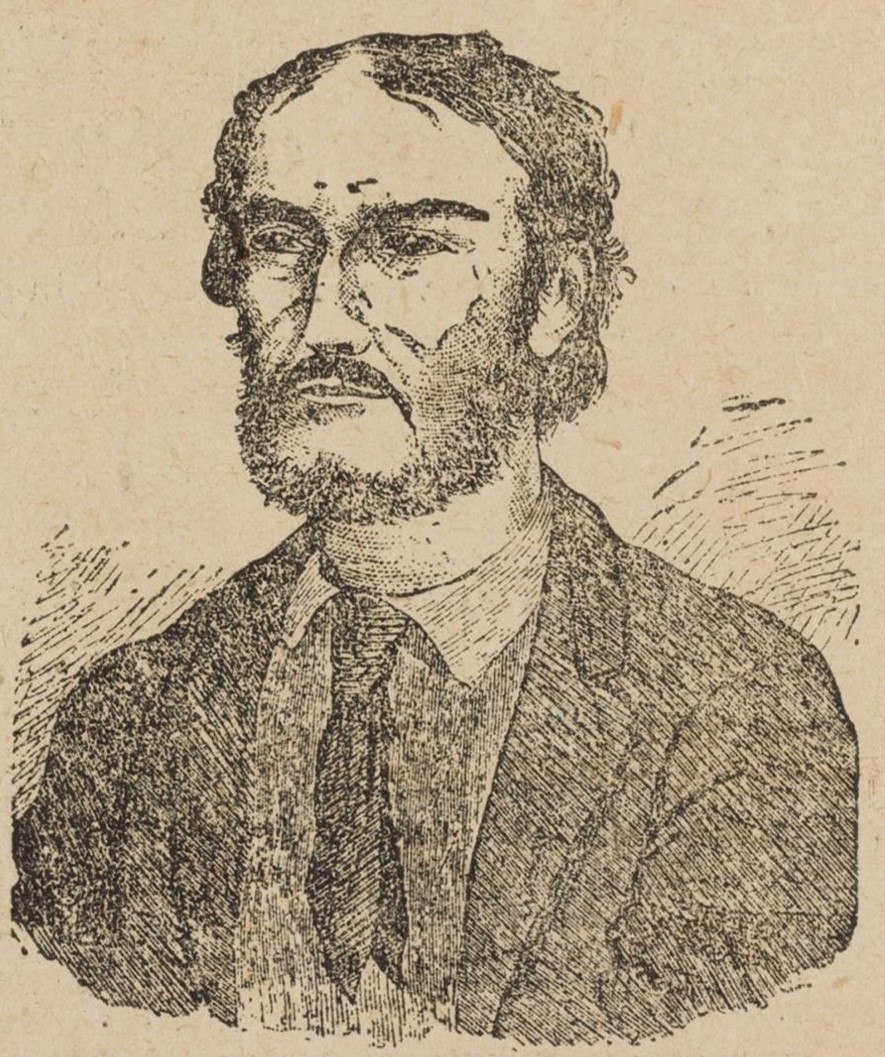
Bushranger Captain Thunderbolt
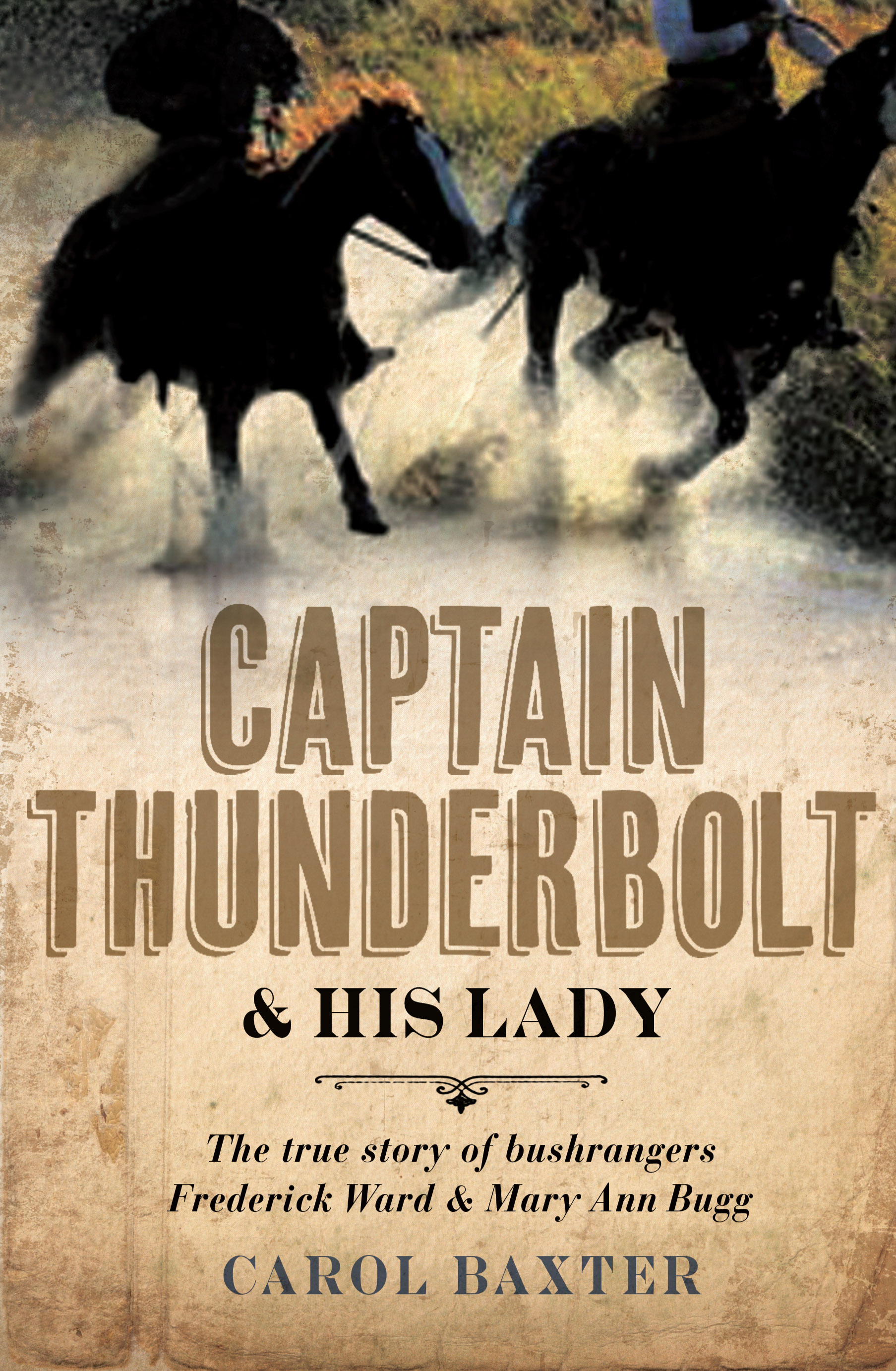
Carol Baxter is the author of the book, Captain Thunderbolt and His Lady: The true story of bushrangers Frederick Ward and Mary Ann Bugg (Allen & Unwin, 2011). It was published to critical acclaim and is being turned into a TV series.
While researching the lives of Fred and Mary Ann, Carol discovered that many of the claims made in books, articles and websites about them and their associates are wrong. To ensure that the correct information makes its way into the public arena, she analyses the evidence and debunks the myths about Fred and Mary Ann.
Topics covered below
- Did Fred Ward marry Mary Ann Bugg?
- How many children were born to Fred Ward and Mary Ann Bugg?
Topics covered on Carol Baxter's previous Thunderbolt website but not published here
Most of the spurious information about Fred Ward and Mary Ann Bugg was published on the website of a Ward descendant, Barry Sinclair. Now that his website is no longer accessible, there is less need to debunk its many error-ridden claims. Thus, the following analysis that was published on Carol's original Thunderbolt website has not been reproduced here.
- Did Fred Ward take "paternity leave"? (The answer is "no".)
Links to additional information
Did Frederick Ward and Mary Ann Bugg marry?
Many Thunderbolt books and articles claim that Fred and Mary Ann were legally married. Most draw upon the statement made by a Mrs Deamer who reported in the North-West Champion on 7 December 1929: "It was at Stroud and I was going to school at the time. Frederick Ward, that was Thunderbolt’s name, was a nice looking young fellow and the girl he married was Mary Bugg, daughter of Mr Jimmy Bugg who looked after the Pastoral Company’s station at Port Stevens. There was a great to-do at the church the day the wedding was on, and we were all let out of school to see them come out of church."[1]
The illogicality of the above statement does not seem to occur to those who use it as evidence of Fred and Mary Ann’s marriage. So let’s examine the claim itself and set it against the historical backdrop.
First, Mrs Deamer’s statement intimates that Fred was already renowned as the bushranger Thunderbolt at the time of his marriage, otherwise why would there be a great “to-do” at the church and why would the children be let out of school to watch? Yet Stroud was a police town. If Fred and Mary Ann attempted to marry after he absconded from Cockatoo Island, the police would have interrupted the ceremony with guns and shackles. There would indeed have been a great “to-do” at the church but it would have ended with Fred in custody or a newspaper report about his dramatic escape from the police.
Second, marriage was an important official ceremony as it was associated with legitimacy and inheritance. While people could be baptised and buried as they chose, laws dictated how they could marry. Bigamy was a crime and de facto wives and illegitimate children had few legal rights. It all came down to money! Accordingly, those choosing a church ceremony could marry by licence or by banns. Marrying by licence required payment of a fee and official approval. If bushranger Thunderbolt attempted to purchase a licence, he would immediately be apprehended by the police. Marrying by banns required Fred and Mary Ann to approach the clergyman and ask for approval (at which point he would naturally call the police), and have their marriage banns called at the church for three consecutive weeks. Thus, anyone with reason to believe they should not marry could approach the authorities. An escaped prisoner/current bushranger attempting to marry by banns in a police town is as absurd a notion as one such person attempting to purchase a marriage licence.
What if this supposed marriage occurred prior to Fred’s return to Cockatoo Island in 1861? If so, there would have been no “to do” and no reason to let the children out of school to watch the couple leave the church.
Some claim that Mrs Deamer’s reference to Fred and Mary Ann’s marriage is supported by the 1861 birth certificate of their daughter Marina, which lists that they were married in “1860 NSW”. As the authorities wanted the full date and place of marriage, this information is surprisingly sparse, particularly when the alleged marriage occurred only the previous year. Experience has shown that this type of incomplete reference usually indicates that the couple had not been officially married and were attempting to hide the truth. Couples did not say “unmarried” when asked for the date and place of their marriage. Instead they lied.
Could they have been married in 1860 at Stroud? Impossible. Fred and Mary Ann were both living in Mudgee at that time. And why would they be married at Stroud anyway? Fred took the heavily pregnant Mary Ann from Mudgee back to her father’s Monkerai farm in mid-1861, a farm that lay near Dungog, not Stroud, so if they chose to marry at that time, it would more likely have been in Dungog than Stroud.
Then there is the question regarding their legal right to marry. No evidence has been found to suggest that Mary Ann was a widow at that time as no trace has been found of the death of her husband, Edmund/Edward Baker. One cannot simply assume that Baker was dead because Mary Ann said so in 1866 to a magistrate who knew her and her family. Claiming that her previous husband was dead and that she had married Ward was expedient at the time as she was trying to appear in a favourable light.[2]
If Baker was indeed dead, why wouldn’t she have married John Burrows, either in 1850 when she first joined him or in 1869 or later decades? And why wouldn’t she have married James McNally during the five years she lived with him? The fact that she didn’t marry either of these men, when marriage would have provided herself and her children with financial security, suggests that she couldn’t marry them, either because Baker was still alive or because she didn’t know if he was alive or dead.
When Fred and Mary Ann’s youngest child, Frederick junior, was born in 1868, Mary Ann listed her name on his birth certificate as Mary Ann Baker. That is, she used the legal married name she bore at the time she met Fred. If she had married Fred, her legal name in 1868 would have been Ward not Baker.
Let’s come back to Mrs Deamer herself. Who was she and could she have indeed been attending school at the time Fred and Mary Ann were supposedly married?
As the only time Fred and Mary Ann could have been married at Stroud was in mid-1861, Mrs Deamer must have been at least five years of age at that time, therefore born in the mid-1850s or earlier. As women generally married a man older than themselves, this would suggest that her husband was born in the 1850s or earlier. Deamer/Deemer is fortunately a rare surname and only two such couples were having children in the mid-1800s, one in Sydney (married 1861) and one in Newcastle (married 1864, with the eldest surviving son born in 1868). As Mrs Deamer claimed that she was living in Stroud in the 1860s, then she most likely married into the Newcastle family. As Mrs Deamer provided her 1929 report to the North-West Champion (later the Moree Champion), this suggests that she later moved to the Moree district.
Two sons of the Newcastle Deamers were married in the Hunter River district and later moved to Moree. In 1902 at Raymond Terrace, Charley Deamer married Bena Blanch, whose birth was registered in 1881 at Raymond Terrace. In 1896, also at Raymond Terrace, George Deamer married Lavinia Matilda Gordon who birth was registered in 1880 at Newcastle. Obviously neither woman was alive in the 1860s, so neither woman could have watched Fred and Mary Ann leave the church after their wedding.
The death notice of a Margaret Deamer in 1934[3] reports that she was born in Dungog 90 years previously, married Charles Deamer, and lived in Moree for about 13 years prior to her death.[3] The Registry of Births, Deaths and Marriages online indexes reveal that Margaret Smith married Charles Deamer in 1869 at Warialda. According to Margaret Deamer's entry in the death certificate indexes, her parents were William and Anna. A William and Hannah Smith (Hannah and Anna were often used interchangeably in the past) were listed in the indexes as having children in the Hunter district between 1841 and 1845 (none of whom were named Margaret), however a William and Hannah Smith had a daughter Margaret baptised at Port Macquarie in 1840. No other couple named William and Hannah/Anna Smith were documented as having children in NSW in the 1840s. If Margaret Smith/Deamer was the child born in 1840, then she was too old to be attending school in the 1860s. Even if she was born around 1844, as her death notice indicates, she was unlikely to be still attending school at the age of 16 or older. And if she was in her mid-80s in 1929 when this information was provided to the newspaper, her memory was quite feasibly faulty.
Clearly, the claim that Fred and Mary Ann were married at Stroud is supported by neither evidence nor logic. In fact, no evidence has survived to suggest that they were legally married at all. The claims are just part of the Thunderbolt mythology: an attempt to make a “baddie” as “good” as possible.
Sources
[1] Quoted in Williams, Stephan A Ghost called Thunderbolt, Popinjay, Woden (ACT), 1987, pp.157-8
[2] Colonial Secretary In-Letters: Magistrate Thomas Nicholls to Attorney General, 11 Apr 1866 [SRNSW 4/573 No.66/1844]
[3] Sydney Morning Herald 3 Nov 1934 p.10
How many children were born to Frederick Ward and Mary Ann Bugg?
It is impossible to state with certainty how many children Fred and Mary Ann had. We know from Mary Ann’s death certificate that Fred fathered three who survived to adulthood: Marina (1861), ?Eliza (1865) and Fred Jnr (1868).[1]
It is also possible that Fred fathered one (or perhaps two) who died in infancy. Mary Ann reported in 1876 in the birth certificate of her son George that she had eleven children living at that time with another two deceased. No traces of the deceased children have been found to date; however, we can speculate when these children might have been born. The list of Mary Ann’s known children shows small gaps in 1864 and 1867 and a large gap around 1872. Given that two of these gaps fall within the time-frame of her relationship with Fred Ward, it is likely that at least one of her deceased children was fathered by Fred.[1]
The claims in various Thunderbolt publications that Fred and Mary Ann were the parents of Elizabeth Ann born in 1864 and Mary Ann born in 1866 are wrong, although the child Elizabeth Ann (allegedly born in 1864) was almost certainly the child Eliza (born in mid-1865).[1] The only references to a child named Mary Ann are found in letters from descendants that are among the Thunderbolt papers held at the Armidale Heritage Centre. They offer no substantiation other than “family stories” and they are not supported by any primary source evidence whatsoever.
Sources
[1] See Mary Ann Bugg: “Husbands” and Children for more detailed information and source references.